
Phosphate Test Strips
Detect low-range phosphates instantly to protect against stubborn pool algae.
Test crucial phosphate levels in just 90 seconds. Our low-range test tube method and easy-to-read strips measure Phosphate accurately, helping you starve off algae growth and keeping your pool water crystal clear and perfectly balanced.
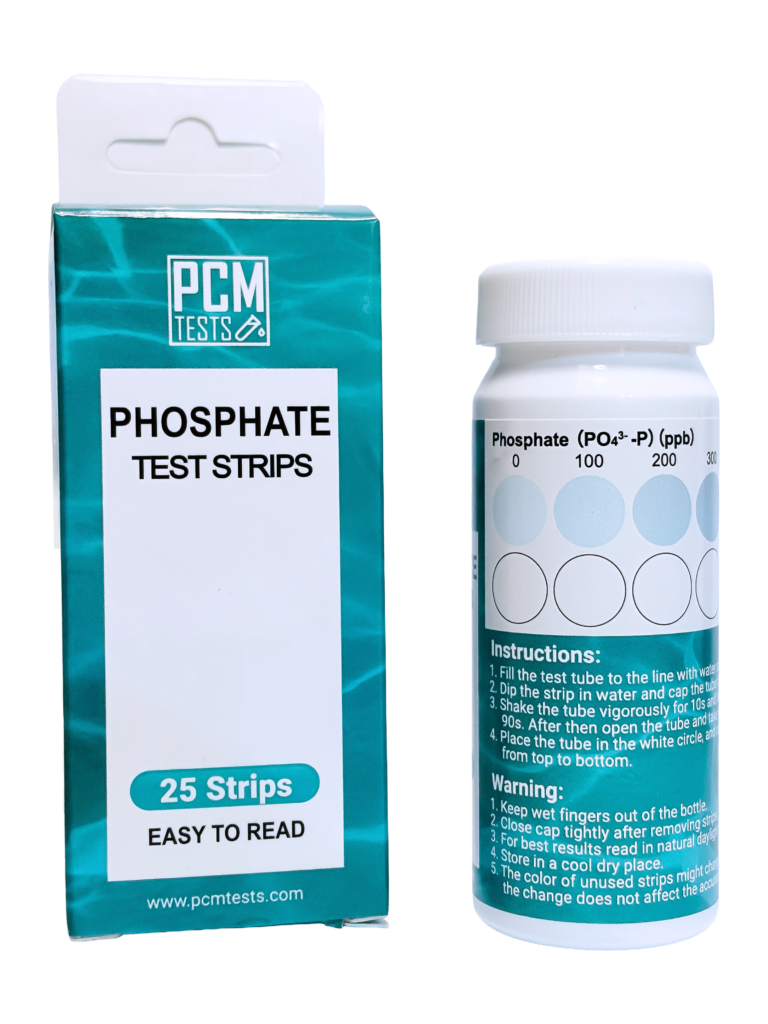
Product Information
- Parameters tested 1 (Phosphate)
- Strips per bottle 25 Strips
- Results in 90 seconds
- For use with Water
- Storage Store in a cool dry place. Close cap tightly after removing strips.
- Certifications FDA, ISO, RoHS
How to Use
Prepare Sample
Fill the test tube to the line with water sample.
Mix & Wait
Dip the strip in water and cap the tube tightly. Shake the tube vigorously for 10s and let it stand for 90s. After then open the tube and take out the test strip.
Read
Place the tube in the white circle, and compare the color from top to bottom.
What You Test
Recommended ideal ranges for pool and spa water. For a detailed explanation of each parameter and what to do if values are off, visit our Water Chemistry Guide.
Warning about test strip use during measurement Situations that can affect the accuracy of results
To obtain reliable measurements with test strips, it is important to keep the following situations in mind, as certain water parameter levels can alter the results:
-
Excess chlorine
It is very important to avoid excessively high chlorine levels in the water. Excess chlorine can alter the colouring of the different pads on the test strip and, as a result, affect the interpretation of the remaining parameters. For a correct measurement, we recommend testing with a chlorine level within normal values.
-
Low alkalinity levels
Alkalinity that is too low can affect the accuracy of the pH measurement. Under these conditions, the test strip may indicate a pH level lower than the actual one. If the alkalinity pad shows a yellow colour, indicating very low alkalinity, the pH result may also be affected. To guarantee a more reliable measurement, we recommend keeping alkalinity above 70 ppm.
-
Low alkalinity levels and cyanuric acid measurement
Low alkalinity levels can also cause incorrect results in the cyanuric acid (chlorine stabiliser) measurement. When low alkalinity is combined with a pH below 7.2, there is a high probability that the stabiliser result will be unreliable or incorrect.
Recommendation
Before interpreting the test strip results, make sure the water parameters are within the recommended levels or, at the very least, that there are no significant excesses or deficits of the elements analysed. This helps minimise possible interference and obtain more accurate, more reliable measurements.